
How to Get Solar Panels for Global Projects?
Getting solar panels for global projects is not simply a matter of choosing the lowest quotation. Procurement teams must connect module quality, site conditions, shipping routes, financing, and local installation capacity. A panel designed for a dry desert may perform differently in humid coastal air. Snow loads, dust, heat, and unstable grids also change the technical decision.
Fatih Birol, Executive Director of the International Energy Agency, said, “Solar PV is now the cheapest source of electricity in history.” That statement explains the market’s momentum, but it does not remove practical risks. Buyers still need verified power ratings, degradation data, product warranties, and independent testing records. Bankable manufacturers usually provide clearer documentation. Yet even strong documents cannot replace careful site inspections.
The process should begin with an energy assessment and a realistic project schedule. Teams can compare monocrystalline modules, bifacial designs, inverters, mounting systems, and spare-part availability. They should also check port access, customs procedures, insurance, and qualified local contractors. Small details matter. A delayed container can hold back an entire construction crew. A missing connector can stop a field installation.
There is no perfect procurement formula. A cheaper module may create higher replacement costs later. A premium supplier may still disappoint if communication fails. Project owners should test samples, review references, and record every assumption. That discipline makes getting solar panels more reliable across different countries, climates, and project scales. The difficult part is not purchasing equipment. It is making the equipment work consistently after delivery.
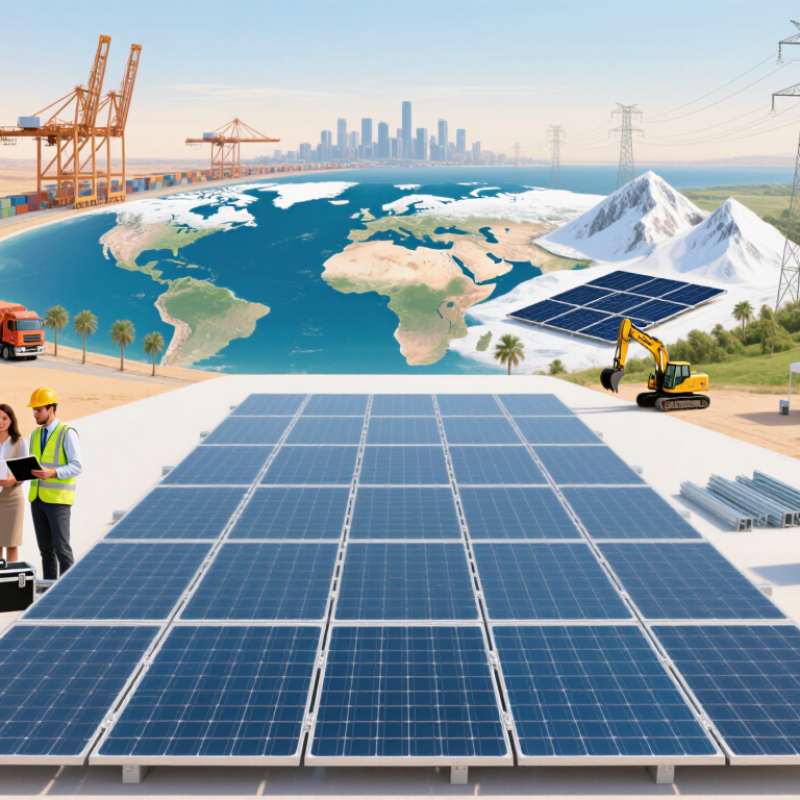
Define Project Requirements and Solar Energy Goals
Before sourcing solar panels, define what the project must achieve. A rural clinic may need reliable power for refrigeration, lighting, and medical equipment. A logistics site may prioritize daytime production and lower operating costs. These goals shape the system design.
Gather twelve months of electricity bills, hourly load data, and local solar irradiation records. Identify seasonal changes, cloudy periods, roof orientation, available land, and shading from nearby structures. Check whether the site needs batteries, backup generation, or grid connection. Small details matter. A water pump starting at sunrise creates a different demand pattern from office computers running at noon.
Set measurable targets, such as annual energy production, acceptable outage time, payback period, and carbon reduction. Include maintenance access, panel cleaning, replacement parts, and local technical skills. Project teams should also review building codes, electrical standards, fire safety rules, and grid requirements with qualified local professionals.
Our early estimates were too optimistic because they used ideal weather data and ignored dust accumulation. That mistake changed our process. We now apply conservative performance assumptions and test several system sizes before approval. The cheapest design may not serve the project well. A slightly larger system with monitoring and storage can provide stronger resilience, but only when its costs match the site’s real energy goals.
| Project Dimension | Key Requirement or Goal | Recommended Planning Data | Typical Reference Range | Why It Matters |
|---|---|---|---|---|
| Project Scale | Define the total solar capacity required | Estimate annual electricity demand, available land or roof area, and the target share of electricity supplied by solar. | 10 kW to 1 MW+ depending on project type | Capacity determines equipment quantity, grid requirements, permitting complexity, transport volume, and installation resources. |
| Energy Demand | Establish current and future electricity consumption | Collect monthly electricity bills, interval-load data where available, operating hours, seasonal demand, and planned load growth. | Use at least 12 consecutive months of demand data | Accurate load data helps prevent oversizing, curtailment, and insufficient energy production during high-demand periods. |
| Solar Resource | Measure the site’s solar potential | Assess global horizontal irradiation, plane-of-array irradiation, temperature, rainfall, dust, snow, and shading conditions. | Approximately 1,000–2,500 kWh/m²/year of global horizontal irradiation in many project regions | Solar resource is a major factor in annual yield, financial returns, and the number of panels required. |
| Energy Goal | Set a renewable electricity target | Specify whether the goal is reducing grid purchases, achieving a percentage of renewable electricity, lowering emissions, or supplying an off-grid load. | Common targets: 25%, 50%, 75%, or 100% annual renewable electricity | A clear target guides system sizing and identifies whether storage, backup generation, or grid interaction is necessary. |
| System Type | Select the appropriate project configuration | Compare rooftop, ground-mounted, carport, floating, hybrid, grid-connected, and off-grid configurations. | Grid-connected systems are generally simpler than off-grid systems | The configuration affects structural design, land use, electrical architecture, approvals, maintenance, and project cost. |
| Land or Roof Area | Verify that the site can accommodate the array | Check usable area, orientation, slope, access roads, setbacks, drainage, roof condition, and future expansion space. | Approximately 4–10 m² of gross ground area per kW for many ground-mounted layouts | The actual area depends on module efficiency, row spacing, terrain, shading limits, fire access, and local regulations. |
| Module Technology | Define required module performance | Specify power rating, efficiency, temperature coefficient, mechanical load rating, degradation rate, and environmental certifications. | Commercial modules commonly exceed 20% efficiency; power ratings vary by format and application | Higher efficiency can reduce land use, cabling, mounting quantities, and installation labor for space-constrained sites. |
| Electricity Output | Estimate annual solar generation | Model production using solar irradiation, system capacity, orientation, tilt, temperature, soiling, mismatch, inverter, and wiring losses. | Typical net yield varies widely by location, often about 900–2,000 kWh per installed kW per year | Energy yield, rather than nameplate capacity alone, should be used to compare project performance and financial outcomes. |
| Performance Ratio | Set a realistic system efficiency benchmark | Include losses from temperature, inverter conversion, wiring, shading, soiling, module mismatch, availability, and degradation. | Approximately 70%–90% for many well-designed photovoltaic systems | The performance ratio indicates how effectively the system converts available sunlight into usable electricity. |
| Energy Storage | Determine whether batteries are required | Define backup duration, critical loads, peak-shaving needs, outage frequency, time-of-use tariffs, and expected battery cycling. | Common backup objectives range from 2–8 hours of critical-load coverage | Storage can improve resilience and self-consumption but adds capital cost, thermal management, replacement, and safety requirements. |
| Grid Connection | Confirm interconnection capacity and operating rules | Review available voltage level, transformer capacity, protection requirements, export limits, metering, and utility approval procedures. | Interconnection requirements are site-specific and must be confirmed with the local grid authority | Grid constraints may limit export, require upgrades, or change the optimal system size and inverter configuration. |
| Climate and Environment | Match equipment to local conditions | Assess maximum and minimum temperatures, humidity, salt mist, wind, snow, hail, dust, flooding, and seismic exposure. | Design conditions should follow applicable local structural and electrical standards | Environmental compatibility reduces premature failures and supports reliable operation throughout the project life. |
| Installation Timeline | Set procurement and construction milestones | Define design completion, permitting, equipment procurement, shipping, customs clearance, civil works, installation, testing, and commissioning dates. | Small projects may take several months; large projects commonly require longer development and construction schedules | Early scheduling helps manage long-lead components, seasonal construction conditions, and international logistics. |
| Budget and Finance | Establish a complete project cost model | Include modules, inverters, mounting, cables, civil works, labor, engineering, transport, duties, insurance, permits, operations, and contingency. | Use location-specific quotations rather than a universal cost per watt | Local labor rates, currency, taxes, logistics, financing costs, and site conditions can significantly change total project cost. |
| Carbon Reduction | Quantify expected emissions avoidance | Calculate annual solar generation and multiply it by the applicable grid or displaced-generation emissions factor. | Use a published, location-specific electricity emissions factor | The result should distinguish between avoided operational emissions and the embodied emissions of equipment and construction. |
| Operations and Maintenance | Define long-term performance responsibilities | Plan inspections, cleaning, vegetation control, monitoring, inverter servicing, spare parts, warranty administration, and safety checks. | Plan for a service life of approximately 25–30 years, subject to component replacement | A maintenance plan protects energy yield, identifies faults early, and supports long-term financial performance. |
| Quality and Compliance | Specify testing and documentation requirements | Require factory quality records, electrical testing, structural calculations, commissioning reports, as-built drawings, and safety documentation. | Apply the electrical, structural, fire, and permitting standards required in the project jurisdiction | Consistent quality requirements reduce technical risk and make international project delivery easier to verify. |
Related Posts
-
Top 10 Things to Know Before Getting Solar Panels?
-
Why Choose Solar Energy Panels for Global Buyers?
-
Why Are Global Buyers Getting Solar Panels?
-
Top 10 Solar Panel Reviews for Smart Buyers in 2026?
-
Why Choose Solar Panels in Singapore for Your Home?
-
What is the Best Solar Panel in Singapore for Global Buyers?