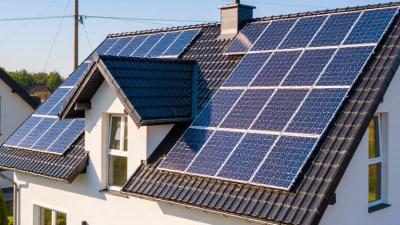
Buying solar panels often begins with a search, then turns into a stack of ratings, installer comments, and product claims. Solar panel reviews can help, but a five-star score rarely tells the whole story. A review about a sunny Arizona roof may not fit a shaded home in Maine. Details matter.
Vikram Aggarwal, founder of EnergySage, advises shoppers to compare solar offers carefully. His consumer guidance can be summed up in one practical sentence: “Compare complete proposals, not just headline prices.” That principle also helps when reading reviews. Look for specifics: panel and inverter models, system size, installation date, local weather, and whether the reviewer describes performance over time. A photo of a tidy roof is useful, but it cannot confirm annual energy production.
Some reviews are vague. Others may reflect one unusually smooth—or frustrating—installation. That is worth remembering. Check whether reviewers discuss service after installation, warranty support, and production estimates alongside price. Compare repeated patterns across independent sources, and treat dramatic claims with care. Then match those findings to your own roof, electricity use, and budget. No review can make that decision for you. It can, however, help you ask sharper questions before signing.

When comparing solar panel reviews, start with the test conditions behind each power rating. Standard Test Conditions (STC) use 1,000 W/m² of irradiance, a cell temperature of 25°C, and the AM1.5 reference spectrum. That 25°C applies to the cell, not the air around the panel. A sunny roof can have much hotter cells.
Check whether a review’s wattage comes from an STC datasheet or an outdoor measurement. Those figures are not directly interchangeable. The National Renewable Energy Laboratory’s PVWatts documentation treats module power as a reference rating, then estimates real-world output using factors such as temperature and system losses. Look for the temperature coefficient, measurement method, and power tolerance alongside the headline watts. Small print matters.
The IEA PVPS Trends in Photovoltaic Applications 2024 report estimated 456 GW of new solar capacity installed worldwide in 2023. With so many products being compared, consistent test conditions help keep reviews useful. Still, STC is a benchmark, not a promise of rooftop output. A review that shows a bright lab graph but omits cell temperature leaves a gap. I would want more detail, too. Compare panels under the same stated conditions, then read outdoor results separately.
Compare efficiency, power output, and temperature coefficients using the same conditions. A panel’s efficiency measures how much sunlight it converts into electricity; rated power measures its output under standard test conditions. Compare watts per square metre when panel sizes differ. Otherwise, a larger panel may seem stronger simply because it covers more roof.
Check the temperature coefficient in the specification sheet, usually written as percent per degree Celsius. A more negative number means output drops faster as the panel heats up. NREL’s PVWatts documentation uses temperature-coefficient defaults of −0.37%/°C for standard crystalline silicon modules and −0.35%/°C for premium modules. These are modeling defaults, not guarantees for a specific panel. On a hot roof, the difference matters. Still, real performance also depends on mounting, airflow, and shade.
Reviews should report test conditions, not just peak numbers. Compare panels tested at the same irradiance and cell temperature, then check whether reviewers measured output after the panels warmed up. Jordan and Kurtz’s review of nearly 2,000 published degradation rates found a median annual decline of about 0.5%. That figure is a broad historical benchmark, not a forecast for every product. I still find it easy to overlook how much installation conditions can distort comparisons. A tidy table helps, but it cannot replace matching the test setup.
When comparing solar panel reviews, treat longevity claims as measured evidence, not confident adjectives. NREL’s commonly cited benchmark is about 0.5% annual module degradation, though real-world results vary with climate, installation, and test methods. At that rate, a panel retains roughly 88% of its original output after 25 years, assuming compounded decline. That is a reference point, not a promise. Look for dated output measurements, panel age, and how reviewers compared initial and current production. “Still works great” tells you little.
Useful reviews distinguish panel degradation from whole-system output loss. Dust, shade, wiring, and inverter problems can lower production without showing that the panels themselves have degraded. Check whether the reviewer controls for these factors and reports comparable seasons or sunlight conditions. Compare several reviews over time; one unusually strong or weak result may reflect local conditions. Also, a product warranty’s guaranteed minimum output is not the same as typical performance. One detail is easy to miss: a review may sound precise while lacking enough years of data. That gap matters. Be cautious, and note what the evidence cannot establish.
Solar reviews often use words like “reliable” without showing how that claim was checked. Look for evidence behind the adjective. PVEL’s 600-cycle thermal cycling test is one useful reference point: module samples undergo repeated temperature changes that can stress cells, connections, and materials. That matters.
Do not read 600 cycles as 600 years, or as a guarantee of rooftop performance. It is a controlled lab test, not a forecast for every climate or installation. Check which module model was tested, when the test occurred, and whether the review names the protocol. A result for one design may not apply to a revised version. Small detail, big difference.
Compare reported power loss, visible damage, and pass criteria where those details are available. Also check whether the review distinguishes independent test data from manufacturer claims. A favorable result can support a reliability claim, but it cannot replace warranty terms, installation quality, or local service access. It is tempting to treat one score as the answer. It isn’t. A clear review should show both what the test found and what it cannot tell you.
Solar panel reviews are useful only when you know what they measured. A few glowing comments may hide a tiny sample. Look for many dated reviews with details about roof type, climate, and system size. A damp coastal home may not predict performance on a hot, dusty roof. Context matters.
Check whether reviewers share measured energy production or only installation impressions. Compare output with monitoring data over several months, allowing for shade and seasonal changes. Read warranty terms separately: product coverage, performance guarantees, and workmanship protection are different. Fine print is easy to miss. I have trusted a tidy star average too quickly. That is a weak habit.
Tips: Request an itemized installed-cost quote covering permits, mounting, electrical work, and possible upgrades. Compare quotes for the same system size and assumptions. Ask who handles service and what labor is excluded. Keep notes on review dates and test methods. Reviews can guide questions, not settle them. Some uncertainty remains.
| Comparison dimension | What to check | Stronger evidence | Caution when comparing |
|---|---|---|---|
| Review sample size | Count the reviews and identify how many relate to the same panel model, installation type, and time period. | A stated, relevant sample size; reviews collected across multiple installations and reporting both positive and negative experiences. | A high review count does not remove selection bias. A few detailed reviews can offer useful context but are not a reliable estimate of typical results. |
| Test method | Check whether performance claims come from controlled testing, field monitoring, or customer reports—and whether conditions are described. | A documented method with comparable test conditions, measurement period, and clear distinction between panel output and whole-system output. | Results from different climates, roof orientations, shading conditions, or system designs may not be directly comparable. |
| Warranty coverage | Read the written terms for product defects, power output, labor, shipping, claim procedures, and exclusions. | Separate coverage periods and responsibilities are stated clearly. Many solar modules offer long-term performance warranties, often around 25 years, but terms vary. | A performance warranty is not the same as a product or labor warranty. Check the promised output at the end of the term and who pays for removal and reinstallation. |
| Installed cost | Compare written quotes in the same currency and on the same basis, including system size, equipment, labor, permits, and any add-ons. | A line-item quote showing total price and price per watt (total installed price divided by system capacity in watts), before and after any clearly identified incentives. | Installed prices vary by location, roof, system design, and project scope. Do not compare a panel-only price with a complete installed-system price. |
| Review relevance | Match the review’s location, roof conditions, system configuration, and ownership arrangement to your situation. | The reviewer identifies the installation date, approximate system size, site conditions, and whether the review concerns equipment or installation service. | A review of an entire solar installation may reflect the installer, inverter, or service experience—not just the panels. |
| Overall comparison | Use review ratings as one input alongside written specifications, warranty documents, and comparable quotes. | Conclusions agree across independent evidence sources, and limitations or missing information are disclosed. | Treat unusually strong claims without supporting methods, terms, or comparable pricing as unverified rather than as established results. |