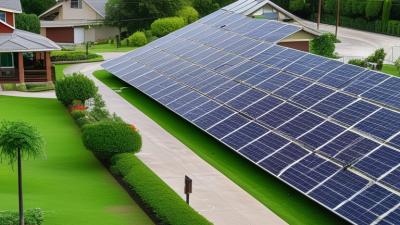
Commercial solar is moving from a niche investment to core business infrastructure. According to IRENA’s Renewable Capacity Statistics 2024, global solar capacity reached approximately 1,419 gigawatts by the end of 2023. Solar also represented nearly three quarters of all renewable capacity added that year. These figures show impressive momentum, but they do not guarantee dependable project results.
The IEA’s Renewables 2024 report expects solar PV to drive most renewable capacity growth through 2030. For commercial buyers, that growth creates more supplier choices and more technical uncertainty. Panel efficiency matters. So do degradation rates, temperature coefficients, warranty terms, and delivery reliability. A warehouse roof in Dubai faces different conditions from a factory roof in Germany. Details matter.
This guide examines 10 best commercial solar panel suppliers worldwide through practical business criteria. We consider manufacturing scale, module technology, bankability, certifications, service networks, and documented performance. Supplier rankings can change quickly. Market data is not always perfectly comparable. That deserves honest attention.
A lower module price may hide higher logistics costs or weaker after-sales support. A premium panel may deliver stronger output in limited rooftop space. Buyers should also review independent test results and project references before signing contracts. Real projects reveal more than brochures. The strongest supplier is not always the largest one. It is the supplier that matches site conditions, financing needs, and long-term operating goals.
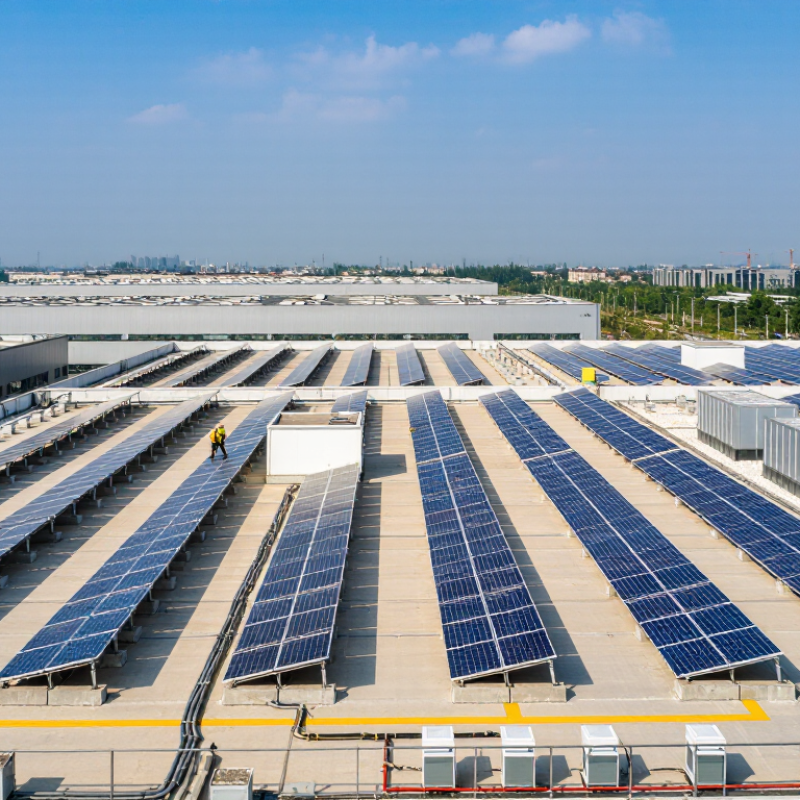
A leading commercial solar panel supplier provides more than panels and attractive pricing. It demonstrates field experience across warehouses, factories, offices, and difficult rooftops. Its technical team studies roof load, shading, wind exposure, drainage, and local grid conditions before recommending equipment. That discipline reduces costly surprises after installation.
Reliable suppliers publish test data, warranty terms, degradation rates, and product traceability. They also explain what their warranty excludes. Clear answers matter. A serious supplier can discuss temperature behavior, inverter compatibility, fire safety, maintenance access, and expected annual output without hiding behind marketing language. Independent certifications and documented quality controls strengthen that credibility. However, even strong suppliers can estimate energy production imperfectly. Weather changes. Dust accumulates. A trustworthy company admits these limits and shows conservative projections.
Tips: Request a site-specific production model, not a generic calculator result. Ask for three comparable commercial references and speak with their facility managers. Check response times for replacement parts and technical support. Review every warranty clause carefully. Small details matter.
Price alone can mislead procurement teams. A cheaper module may create higher labor, downtime, or replacement costs later. Leading suppliers help customers compare lifetime value, not only purchase invoices. They provide training, monitoring access, and practical maintenance guidance. During my own evaluation of solar proposals, the clearest documents were not always the most impressive. Some lacked delivery assumptions or used optimistic shading data. That is worth questioning before signing. A supplier earns trust through evidence, transparent limits, and consistent support after commissioning.
Key Criteria for Comparing Global Commercial Solar Suppliers
Choosing among commercial solar panel suppliers requires more than comparing price per watt. Examine module efficiency, temperature performance, degradation rates, and mechanical strength. A panel producing well in a hot warehouse roof may outperform a cheaper model with impressive laboratory figures. Request independent test reports, factory quality records, and clear product traceability. These details show whether technical claims are dependable.
Supplier reliability matters just as much. Review warranty terms, failure-response procedures, spare-part access, and local technical support. Ask for references from projects with similar roof conditions, grid requirements, and operating climates. Financial stability also deserves attention because warranties are less useful when service disappears. Installer feedback can reveal delays, communication problems, or repeated packaging damage. Datasheets are important, but they never tell the whole story. I have seen comparisons focus too heavily on efficiency and overlook maintenance access.
Tips: Build a weighted scorecard before requesting quotations. Give separate scores for performance, certification, delivery history, monitoring tools, and after-sales support. Check whether projected energy yields use realistic weather data. Confirm the assumptions. A small mismatch in shading or roof temperature can change the payback period significantly. Do not accept unusually high output estimates without asking how they were calculated. Even experienced buyers can miss this detail. Reliability should be measured across the system’s expected operating life, not only during installation.
Recommended evaluation weights based on common commercial PV procurement priorities. The total weighting equals 100%.
Product reliability and long-term financial security typically receive the highest weight in commercial solar sourcing. Buyers should also verify IEC 61215 and IEC 61730 compliance, product and performance warranties, annual degradation rates, delivery capacity, and local after-sales support before making a final decision.
Commercial solar procurement now demands more than a high wattage label. IRENA reported that global solar capacity reached about 1,865 GW by the end of 2024, with roughly 452 GW added that year. Against this scale, the ten supplier profiles emphasize practical fit. The high-volume mono-crystalline supplier offers predictable pricing and broad availability. The n-type TOPCon supplier targets higher output in limited roof space. The heterojunction specialist focuses on strong efficiency and temperature performance. The bifacial supplier suits reflective ground systems. The lightweight module supplier serves aging commercial roofs. The harsh-climate supplier emphasizes salt mist, humidity, and wind testing. The building-integrated supplier combines generation with façade design. The regional stockist reduces delivery delays. The contract manufacturer provides flexible private-label production. The EPC-linked distributor coordinates panels, inverters, and installation schedules.
Efficiency figures need careful reading. Fraunhofer ISE’s Photovoltaics Report shows leading commercial modules commonly exceeding 22% efficiency, but field yield also depends on heat, shading, soiling, and system design. A supplier’s profile should therefore include degradation guarantees, independent testing, warranty enforcement, factory audits, and documented traceability. The best candidate is not always the largest producer. That is an uncomfortable detail. A smaller regional supplier may respond faster when replacement panels are needed. However, limited financial history can increase bankability concerns. Buyers should compare measured performance, delivery records, insurance terms, and service capacity across at least three projects. Paper quality is not field quality. Poor roof surveys still create expensive surprises.
| Profile | Primary Operating Region | Established | Commercial Module Technology | Indicative Module Efficiency | Typical Product Warranty | Manufacturing Scale | Key International Certifications | Commercial Strengths | Best-Fit Project Type | Overall Assessment |
|---|---|---|---|---|---|---|---|---|---|---|
| Supplier Profile 01 | East Asia; global distribution network | 1988 | N-type TOPConMonocrystallineBifacial | Up to approximately 23.2% | 12-year product warranty; up to 30-year linear performance warranty | Multi-gigawatt annual module manufacturing capacity across several countries | IEC 61215, IEC 61730, ISO 9001; UL-listed products available for applicable markets | Strong utility-scale experience, broad product portfolio, and established project-bankability record | Large commercial rooftops and utility-scale solar farms | High global suitability |
| Supplier Profile 02 | East Asia; North America, Europe, and Asia-Pacific coverage | 2000 | N-type TOPConMonocrystallineBifacial | Up to approximately 23.2% | 12-year product warranty; up to 30-year performance warranty | Large-scale, vertically integrated manufacturing and international logistics capacity | IEC 61215, IEC 61730, ISO 9001; UL and regional compliance options | High-volume supply, competitive cost structure, and strong availability of high-power modules | Industrial rooftops, ground-mounted systems, and large tenders | High global suitability |
| Supplier Profile 03 | East Asia; extensive European and American sales channels | 2005 | N-type TOPConMonocrystallineBifacial | Up to approximately 23.2% | 12-year product warranty; up to 30-year linear performance warranty | High-volume global production with a large research and development organization | IEC 61215, IEC 61730, ISO 9001; market-specific UL certifications available | High power density, strong research capability, and extensive installer familiarity | Space-constrained commercial roofs and utility-scale developments | High global suitability |
| Supplier Profile 04 | East Asia; global project and distribution coverage | 2001 | N-type TOPConPERCBifacial | Up to approximately 23.3% | 12-year product warranty; up to 30-year performance warranty | Multi-gigawatt manufacturing platform serving commercial and utility projects | IEC 61215, IEC 61730, ISO 9001; UL certification available for designated models | Wide module selection, competitive pricing, and mature international distribution | Commercial rooftops, carports, and utility-scale installations | High global suitability |
| Supplier Profile 05 | North America and East Asia; worldwide sales presence | 2001 | N-type TOPConMonocrystallineBifacial | Up to approximately 23.4% | 12-year product warranty; up to 30-year performance warranty | Large international manufacturing footprint with regional supply-chain options | IEC 61215, IEC 61730, ISO 9001; UL and North American market certifications available | Bankable project support, broad geographic reach, and a wide range of module formats | Commercial, industrial, and utility-scale projects requiring diversified sourcing | High global suitability |
| Supplier Profile 06 | East Asia; international distributor and EPC relationships | 1997 | N-type TOPConPERCBifacial | Up to approximately 23.0% | 12-year product warranty; up to 30-year performance warranty on selected series | Large-scale module manufacturing with multiple overseas sales and service channels | IEC 61215, IEC 61730, ISO 9001; UL certification available for selected products | Flexible product configurations, competitive procurement pricing, and broad project experience | Price-sensitive commercial rooftops and ground-mounted projects | Strong value option |
| Supplier Profile 07 | South Korea and East Asia; established global sales network | 1999 | MonocrystallineN-type technologyBifacial | Up to approximately 22.5% | 12-year product warranty; up to 25-year performance warranty | Large-scale production supported by international research, quality, and service operations | IEC 61215, IEC 61730, ISO 9001; UL and regional certifications for applicable models | Strong quality-control reputation, reliable technical documentation, and established financing support | Commercial and industrial projects prioritizing quality assurance | Strong quality profile |
| Supplier Profile 08 | East Asia; global distribution and EPC support | 2009 | N-type TOPConMonocrystallineBifacial | Up to approximately 23.3% | 12-year product warranty; up to 30-year performance warranty | High-volume manufacturing with product lines designed for large-format modules | IEC 61215, IEC 61730, ISO 9001; UL-listed variants available for target markets | High module power, strong temperature performance, and competitive large-project supply | Large rooftops, solar carports, and utility-scale systems | Strong project suitability |
| Supplier Profile 09 | North America; manufacturing and project support in multiple regions | 1999 | Cadmium telluride thin-filmSeries-connected modules | Typically below crystalline-silicon module efficiency | 12-year limited product warranty; up to 30-year performance warranty, depending on series | Specialized thin-film manufacturing with dedicated utility-scale production facilities | IEC 61646, IEC 61730, ISO 9001; UL certification and regional compliance available | Strong hot-climate performance, favorable low-light behavior, and integrated utility-scale supply | Large ground-mounted projects and high-temperature environments | Specialist utility option |
| Supplier Profile 10 | East Asia; international wholesale and project distribution | 2010 | N-type TOPConPERCBifacial | Up to approximately 23.0% | 12-year product warranty; up to 30-year performance warranty on current series | Multi-gigawatt manufacturing operations serving commercial and utility markets | IEC 61215, IEC 61730, ISO 9001; UL and regional certifications for designated products | Competitive total system cost, high-power formats, and flexible distributor support | Commercial rooftops, agricultural projects, and utility-scale arrays | Strong value option |
| Note: Supplier labels are anonymized and no company or brand names are shown. Efficiency, warranty, certification, and capacity figures represent publicly reported commercial product ranges and may vary by model, market, installation conditions, and purchase date. Final procurement decisions should verify current datasheets, warranty terms, certifications, bankability, and local compliance requirements. | ||||||||||
10 Best Commercial Solar Panel Suppliers Worldwide
Global solar procurement now demands more than a familiar name. IRENA’s Renewable Capacity Statistics 2024 recorded about 1,419 GW of installed solar photovoltaic capacity by the end of 2023. This scale has widened product choices, including monofacial, bifacial, glass-glass, and lightweight modules. Buyers should match the format to the site. A warehouse roof may favor lighter panels, while a utility project may benefit from bifacial designs and tracking systems.
Efficiency needs careful interpretation. The NREL Best Research-Cell Efficiency Chart places leading silicon cells above 26%, but commercial modules usually achieve less. That gap matters. A panel rated near 23% can produce more electricity from a crowded roof, yet temperature, shading, inverter limits, and installation quality reduce field output. Product sheets often look precise. Real roofs are not.
Reliability comparisons should include damp-heat, thermal-cycling, mechanical-load, and hail testing. The PV Evolution Labs Scorecard is a useful independent reference because it evaluates manufacturing consistency and stress-test performance. Warranty terms also deserve scrutiny. Many commercial modules offer roughly 12–25 years of product coverage and 25–30 years of performance coverage, but exclusions vary widely. Degradation guarantees may promise around 0.3–0.5% annual loss after the first year. That sounds reassuring. However, claim procedures, local service capacity, and installer workmanship can matter more than an impressive number. Buyers should request test reports, serial-level traceability, and written evidence of regional support.
Selecting a commercial solar supplier begins with the project, not a product catalogue. Examine roof loading, shading, wind exposure, grid limits, and annual electricity demand. Ask suppliers to model output using your site’s weather data. Generic yield estimates are easy to produce. They are not enough. Request module degradation figures, inverter efficiency, temperature coefficients, and tested operating ranges. An experienced supplier should explain assumptions clearly and show seasonal effects on cash flow.
Reliability requires evidence beyond polished sales material. Check independent test reports, factory quality procedures, traceability, and certifications recognized in your market. Review warranty terms carefully, including labor, transport, exclusions, and claim response times. A twenty-five-year warranty means little if the process is unclear. Ask for three comparable project references, then speak with the owners. Confirm delivery capacity, spare-parts access, remote monitoring, and local technical support. Small details matter.
Compare total lifecycle cost rather than the lowest purchase price. Include freight, installation interfaces, replacement parts, inspections, software, and recycling responsibilities. Request a draft contract and study delay penalties, performance guarantees, and change-order rules. Financial strength also deserves attention, especially for long warranties. One uncomfortable lesson from project reviews is that cheap proposals may omit site-specific engineering. Corrections can cost time and trust. I would now score communication quality alongside price. No supplier gets everything right. A transparent answer to a difficult question is often more valuable than a perfect presentation.