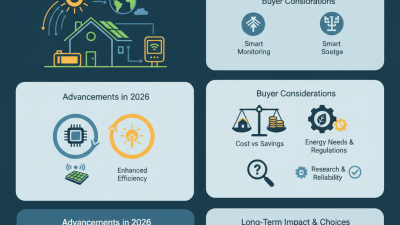
Global buyers are seeking project solar solutions that deliver dependable power, predictable costs, and practical installation support. The market now extends beyond standard rooftop panels. It includes utility-scale photovoltaic plants, commercial rooftop systems, solar farms, hybrid microgrids, battery storage, solar water pumping, mobile solar units, and other tailored configurations. Each type serves a different operating environment.
A remote agricultural site may need a dust-resistant pumping system, while a factory may require rooftop generation with battery backup. A coastal project faces salt air, corrosion, and stronger maintenance demands. These details can change equipment selection, warranties, and total ownership costs. Experienced developers usually examine solar resources, load profiles, grid conditions, site access, financing, and local compliance before approving a design. Small assumptions can become expensive problems.
The right solution is not always the largest one. It must fit the site.
This guide introduces the top 10 types of project solar solutions global buyers commonly evaluate. It considers performance, scalability, installation complexity, maintenance, safety, and supplier reliability. Product certificates and technical claims should be verified independently, especially across different markets and regulatory systems. A supplier’s sales promise is only one part of the evidence. References, monitoring data, component quality, and after-sales response matter just as much.
No shortlist is perfect. Weather changes. Budgets move. Demand forecasts can be wrong. A thoughtful buyer leaves room for those uncertainties, rather than choosing equipment from a brochure alone. The following categories provide a practical starting point for comparing solutions and identifying which model best matches a project’s real operating needs.
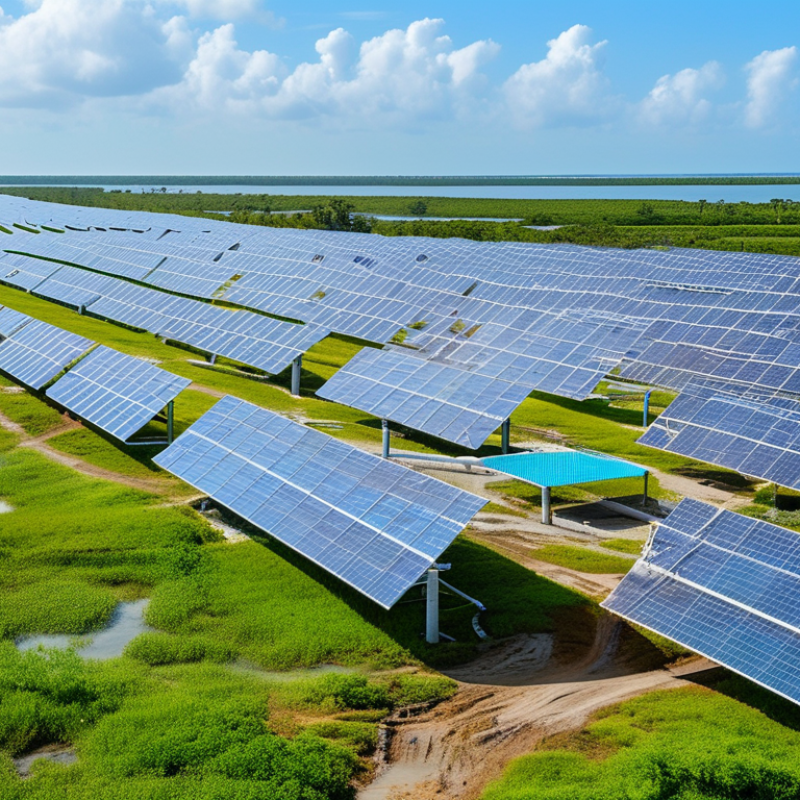
The global PV market has surpassed 2.2 TW of installed capacity. Behind this scale are ten practical project solar solutions serving different sites and energy needs. Utility-scale solar farms deliver bulk electricity across open land. Commercial and industrial rooftops reduce daytime grid purchases. Residential rooftop systems fit smaller loads and limited space. Community solar shares generation with households that lack suitable roofs.
Floating solar uses reservoirs and reduces pressure on scarce land. Agrivoltaic projects place panels above crops or grazing areas. Building-integrated photovoltaics turn façades, roofs, and shading structures into power assets. Off-grid solar kits support remote homes, clinics, farms, and communication sites. Hybrid solar systems combine photovoltaics with wind, diesel backup, or other generation. Solar-plus-storage projects use batteries to shift energy into evening demand.
Field experience shows that location decides more than panel efficiency. A dusty site may need frequent cleaning and stronger maintenance access. Coastal projects face salt corrosion. Mountain sites can produce excellent sunlight but complicate transport and foundations. Forecast models help, yet actual output still depends on weather, curtailment, and equipment downtime.
Good development also requires drainage studies, fire planning, grid analysis, and transparent performance assumptions. Some projects overestimate annual yield. Others underestimate replacement costs. Careful buyers should examine degradation rates, warranties, monitoring data, and local service capacity before construction begins.
Top 10 Types of Project Solar Solutions Global Buyers Need
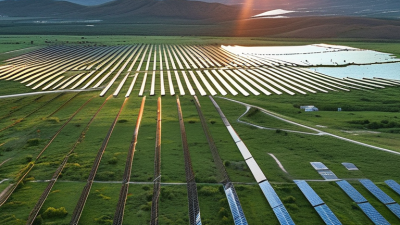
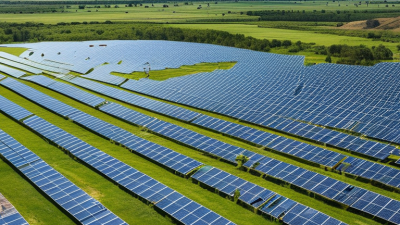
Utility-scale solar farms expanded rapidly in 2024, with more than 500 GW of new global photovoltaic capacity added. That figure is not merely impressive. It changes how buyers evaluate project solar solutions. Developers now need site surveys, yield modeling, grid studies, and bankable engineering before ordering equipment. Key needs include solar modules, fixed-tilt structures, tracking systems, inverters, transformers, battery-ready layouts, monitoring platforms, weather stations, substations, and maintenance services. One weak assumption can distort a twenty-year revenue forecast. Weather matters.
Large projects must balance energy yield, durability, transport, and construction speed. Procurement teams should compare degradation rates, warranty terms, spare-parts access, and installation conditions. Desert dust, coastal salt, snow loads, and weak transmission lines can change the preferred design. Experienced project teams test these risks through field measurements, not attractive spreadsheets alone. That distinction is practical.
The 500+ GW expansion also exposes uncomfortable gaps. Grid queues remain long in many regions, while permitting and interconnection rules vary widely. Some projects announce capacity before securing land, transmission access, or realistic construction schedules. Buyers should request independent resource assessments, transparent loss assumptions, and documented quality-control procedures. Yet no model is perfect. Rainfall, curtailment, and local labor shortages may reduce actual output. A design that looks optimal on paper can disappoint during commissioning. Reliable suppliers disclose limitations and revise plans when site evidence contradicts early assumptions. That honesty is often more valuable than a low initial quotation.
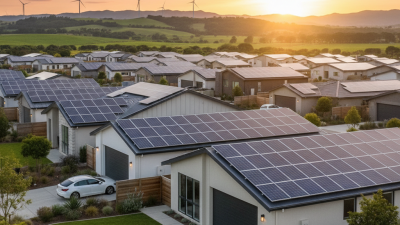
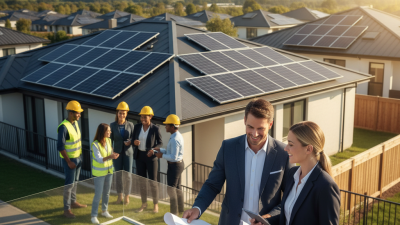
Commercial, industrial, and rooftop systems are accelerating distributed solar growth across many markets. Buyers now seek more than standard panels and inverters. They need complete project solutions that match roof structure, energy demand, local weather, and grid conditions.
Commercial projects often include rooftop arrays, carport systems, battery storage, and smart energy controls. Industrial sites may require ground-mounted systems, high-voltage integration, microgrids, or solar solutions for factories and warehouses.
Rooftop projects remain practical for offices, schools, retail buildings, and homes with limited land. Other important types include agricultural solar, floating solar, remote power systems, and hybrid solar projects.
In field assessments, engineers usually inspect roof loading, shading, cable routes, fire access, and maintenance space. A low-cost design can become expensive when these details are ignored.
Tips
Reliable suppliers provide test records, installation guidance, monitoring support, and documented safety procedures. Buyers should also verify compliance with local electrical and building requirements.
No design is perfect. A system may underperform during unusual heat, dust, or grid interruptions. Careful planning reduces surprises, but it cannot remove every risk.
Solar-plus-storage projects are becoming a core solar solution for global buyers. Developers are expanding photovoltaic capacity while planning multi-GWh battery demand. This combination can shift daytime generation into evening peaks, reduce curtailment, and improve grid flexibility. Yet batteries are not simply extra containers beside solar panels. They require careful sizing, thermal management, dispatch planning, and long-term performance checks.
From project experience, the strongest designs begin with the grid connection study. Buyers should examine peak demand, interconnection limits, cycling expectations, and local safety requirements. A battery sized only for maximum energy may perform poorly when power output matters more. Degradation also changes the business case over time. Forecasts are useful, but never perfect. Weather, market prices, and transmission delays can disrupt even well-planned projects. That uncertainty deserves honest financial modeling.
Tips: Match battery duration with the project’s real operating need. Request clear data on usable capacity, degradation, efficiency, warranty conditions, and replacement planning. Review fire protection, emergency access, monitoring systems, and commissioning records before purchase. Ask for independent testing where practical. Small omissions become expensive later. Buyers should also compare lifecycle cost, not only the initial equipment price. A lower bid may hide higher augmentation, maintenance, or disposal expenses. The best solar-plus-storage project is not always the largest one; it is the one that remains dependable after real-world conditions challenge the original plan.
Global annual solar PV additions have accelerated sharply, while battery storage deployment is also scaling to support grid flexibility, renewable integration, and peak-shifting demand.
Solar PV figures represent rounded global annual capacity additions in GW. Battery figures represent rounded global annual battery storage power-capacity additions in GW; the equivalent energy requirement in GWh varies with project duration. Data are rounded from international renewable-energy and electricity-storage market assessments published by the International Energy Agency.
Top 10 Types of Project Solar Solutions Global Buyers Need
Project solar demand is moving beyond standard rooftop arrays. Buyers now need solutions matched to climate, land, load patterns, and maintenance capacity. Off-grid systems support remote clinics, farms, and communication sites where grid access remains unreliable. Hybrid systems combine solar with batteries and backup generation, keeping essential loads active during cloudy periods.
Floating solar uses reservoirs and industrial ponds, reducing land pressure and limiting water evaporation in suitable climates. Agrivoltaic projects place elevated panels above crops, but spacing, shading, and farm machinery require careful planning. Solar-thermal systems deliver hot water or process heat for hotels, factories, and food facilities. Other important categories include utility-scale solar parks, commercial rooftop systems, solar microgrids, battery-backed emergency systems, and solar pumping projects. Each application needs different inverters, mounting structures, monitoring methods, and safety controls.
Tips: Measure the real load before selecting equipment. Check seasonal sunlight, wind, humidity, dust, and water conditions. For floating projects, inspect anchoring and water-level changes. For agrivoltaics, test crop response across one growing season. Buyers should request clear performance assumptions, service procedures, spare-parts plans, and commissioning records. A larger system is not always better. Battery sizing is often underestimated, especially where evening demand rises sharply. Local technicians may also need practical training. Mistakes happen when designs rely only on average weather data.
| No. | Project Solar Solution | Typical Project Scale | Primary Application | Typical Storage / Thermal Configuration | Key Technical Metric | Advantages for Global Buyers | Important Design Considerations |
|---|---|---|---|---|---|---|---|
| 1 | Off-Grid Solar PV | 1 kW–5 MW | Remote homes, telecom sites, rural clinics, schools, water pumping, and isolated industrial loads | Battery energy storage is commonly sized for approximately 1–3 days of critical-load autonomy | PV module efficiency commonly around 18%–23% | No utility connection required Reduces diesel dependence and supports essential services in remote areas |
Load forecasting, seasonal solar resource, battery temperature, spare-parts access, and system maintainability are critical |
| 2 | Grid-Connected Solar PV | 100 kW–500+ MW | Commercial rooftops, factories, public buildings, utility-scale solar parks, and net-metered facilities | Usually grid-connected without batteries; optional storage can provide peak shaving or backup | Typical utility-scale capacity factor: about 15%–30%, depending on location and design | Lowest-complexity mainstream solar configuration with direct electricity sales or on-site consumption | Grid interconnection, curtailment, land availability, inverter compliance, and power-purchase terms affect project returns |
| 3 | Hybrid Solar-Plus-Storage | 50 kW–500 MW | Microgrids, commercial and industrial sites, renewable-energy parks, and grids requiring flexibility | Lithium-ion battery systems commonly provide 1–4 hours of rated power duration | Round-trip battery efficiency commonly about 85%–95% | Combines solar generation with peak shifting, frequency support, backup power, and improved renewable dispatchability | Battery degradation, thermal management, fire protection, degradation guarantees, and revenue-stacking rules must be assessed |
| 4 | Solar Mini-Grid | 10 kW–10 MW | Rural electrification, island communities, agricultural processing, and small commercial clusters | Battery storage is commonly designed for night-time supply and critical-load backup | Typical distribution voltage: low voltage, with medium-voltage networks used for larger systems | Supports local economic activity while avoiding the cost and time of long-distance grid extension | Demand growth, tariff collection, productive-use loads, distribution losses, and local operations capability require planning |
| 5 | Floating Solar PV | 1 MW–1 GW+ | Reservoirs, quarry lakes, irrigation ponds, water-treatment facilities, and hydropower reservoirs | Can be paired with batteries or existing hydropower assets for complementary generation | Water-surface coverage is often planned below approximately 10%–15% to limit ecological and operational risks | Uses non-competitive water surfaces, can reduce land pressure, and may lower evaporation from covered areas | Floatation durability, anchoring, wind and wave loads, water-quality impacts, corrosion, and electrical safety require site-specific review |
| 6 | Agrivoltaic Solar | 100 kW–100 MW | Crop production, grazing, greenhouse operations, irrigation systems, and rural renewable-energy projects | Optional battery storage supports irrigation, refrigeration, and other agricultural loads | Module layouts are commonly elevated or spaced to balance electricity production and crop requirements | Creates dual land use and can provide shade, wind protection, and reduced heat stress for selected crops | Crop selection, shading ratio, machinery clearance, water management, agricultural yield monitoring, and permitting are essential |
| 7 | Solar Water Heating | 2–10,000 m² collector area | Domestic hot water, hotels, hospitals, apartment buildings, swimming pools, and industrial pre-heating | Insulated hot-water storage tanks; auxiliary boilers or electric heaters are often retained for backup | Typical solar fraction: approximately 40%–70% for well-designed domestic hot-water systems | Reduces electricity or fuel consumption for low- and medium-temperature hot-water demand | Collector orientation, freeze protection, scaling, stagnation control, storage volume, and hot-water demand profiles affect performance |
| 8 | Concentrated Solar Power | 50 MW–1 GW | Dispatchable utility electricity generation in regions with strong direct normal irradiance | Molten-salt thermal storage commonly provides approximately 4–15 hours of dispatchable generation | Commercial plants generally require high direct normal irradiance, often around 2,000 kWh/m²/year or more | Thermal storage enables electricity production after sunset and can provide more controllable output than solar PV alone | High direct-solar-resource requirements, water consumption, thermal-fluid management, construction complexity, and financing costs are key factors |
| 9 | Solar Process Heat | 100 kWth–100 MWth | Food processing, textiles, mining, chemicals, desalination, district heating, and other industrial heat loads | Thermal storage tanks or phase-change storage can shift heat delivery; auxiliary heat sources provide reliability | Low- and medium-temperature systems typically deliver heat below approximately 400°C | Can replace a portion of natural gas, coal, oil, or electric heating in suitable industrial processes | Process-temperature consistency, heat-exchanger integration, available roof or land area, and industrial operating schedules are decisive |
| 10 | Solar-Powered Water and Desalination Systems | 10 kW–100 MW | Drinking-water supply, irrigation, livestock watering, wastewater treatment, and seawater desalination | Water tanks provide low-cost storage; batteries or thermal storage may support continuous operation | Reverse-osmosis desalination energy use is commonly about 3–6 kWh per m³ for seawater systems | Improves water access while reducing diesel consumption and operating costs in sun-rich locations | Water quality, pretreatment, membrane fouling, brine disposal, seasonal demand, and pump-inverter compatibility must be evaluated |