Choosing solar power for home in 2026 requires more than comparing panel prices. A suitable system should match your roof, electricity use, budget, and local grid rules. At noon, a shaded chimney can quietly reduce production. An older roof may also need repair before installation. These details affect real savings.
Amory Lovins, an energy expert and co-founder of the Rocky Mountain Institute, has said, “The key to a successful energy transition is to make it profitable.” That principle remains practical for homeowners. Solar power for home should create measurable value, not merely look impressive on a proposal. Compare annual electricity consumption with expected solar generation. Review equipment warranties, installer experience, battery replacement costs, and export rates. Ask for production estimates based on your roof’s direction and nearby shading.
Do not trust every payback promise.
A professional installer should explain assumptions clearly. Independent tools, utility records, and recent electricity bills can help verify those claims. Battery storage may improve resilience during outages, but it can increase the initial cost. Some households may gain more from efficient appliances or insulation first. That is easy to overlook.
The strongest choice is not always the largest system. It is the system that remains useful when electricity prices, household habits, or weather patterns change. Homeowners should also confirm permits, interconnection requirements, and maintenance responsibilities before signing. There is no perfect calculation. Careful comparison, realistic expectations, and room for revision usually produce a more dependable decision.
Assess Your Home’s Solar Energy Needs
Start with twelve months of electricity bills, not a guess from your roof size. The U.S. Energy Information Administration reported average residential electricity use of about 10,791 kilowatt-hours per customer in 2022. Your household may differ sharply. Air conditioning, electric water heating, and home working can raise summer demand.
Separate daily usage from seasonal peaks. A smart meter can reveal whether your home consumes power at noon or after sunset. List future loads, such as an electric vehicle, heat pump, or workshop equipment. These details affect system capacity and battery decisions. Small habits matter too. An old freezer can quietly consume more electricity than expected.
Next, inspect the roof’s usable area, direction, tilt, shading, and age. The National Renewable Energy Laboratory’s PVWatts documentation models these factors, along with weather conditions and system losses. Trees may shade only one panel at 9 a.m., yet that pattern can repeat every morning. Measure carefully.
Do not treat the first calculation as final. My rough estimate could be wrong if a family changes heating systems next year. A qualified installer should compare your bills with local solar production data and explain assumptions clearly. Ask for estimated annual generation, monthly output, degradation, and expected self-consumption. Check the numbers twice.
A typical U.S. home uses more electricity during summer because of air-conditioning and more during winter because of heating and lighting. Use your utility bills to replace these national planning values, then size a solar system around your annual electricity demand and local sunlight conditions.
Reference benchmark: approximately 10,782 kWh per year, or 899 kWh per month, based on rounded U.S. residential electricity-use data from the U.S. Energy Information Administration. Actual consumption varies by climate, home size, heating type, occupancy, and appliances.
Choosing solar in 2026 starts with the roof, not a panel brochure.
Monocrystalline panels suit limited roofs because commercial modules commonly exceed 23% efficiency, according to Fraunhofer ISE’s Photovoltaics Report 2024. Thin-film panels can perform better in weak light and high temperatures, but require more roof area. Bifacial modules may add energy above reflective surfaces. Ordinary dark shingles offer limited rear-side gain. A chimney shadow at 3 p.m. can matter more than laboratory efficiency.
System design changes the result.
A string inverter is usually simpler and cheaper for an unshaded roof. Microinverters can reduce shading losses and provide module-level monitoring. However, they add rooftop electronics. A hybrid inverter with a battery supports evening loads and short outages. It cannot guarantee backup for every circuit. The U.S. National Renewable Energy Laboratory’s Q1 2023 residential benchmark modeled a 7.4-kilowatt system at about $2.68 per watt. That figure is a reference, not a 2026 quote. The IEA PVPS Trends 2024 report placed global solar capacity above 1.4 terawatts at the end of 2023. Scale is impressive. Household design remains local.
Tips: Request hourly shade analysis, not only annual production. Compare degradation rates, usable battery capacity, inverter replacement terms, and winter output. Ask for a circuit-level backup diagram. Check the roof age first. Installing panels over a failing roof is an expensive mistake. No design is perfect.
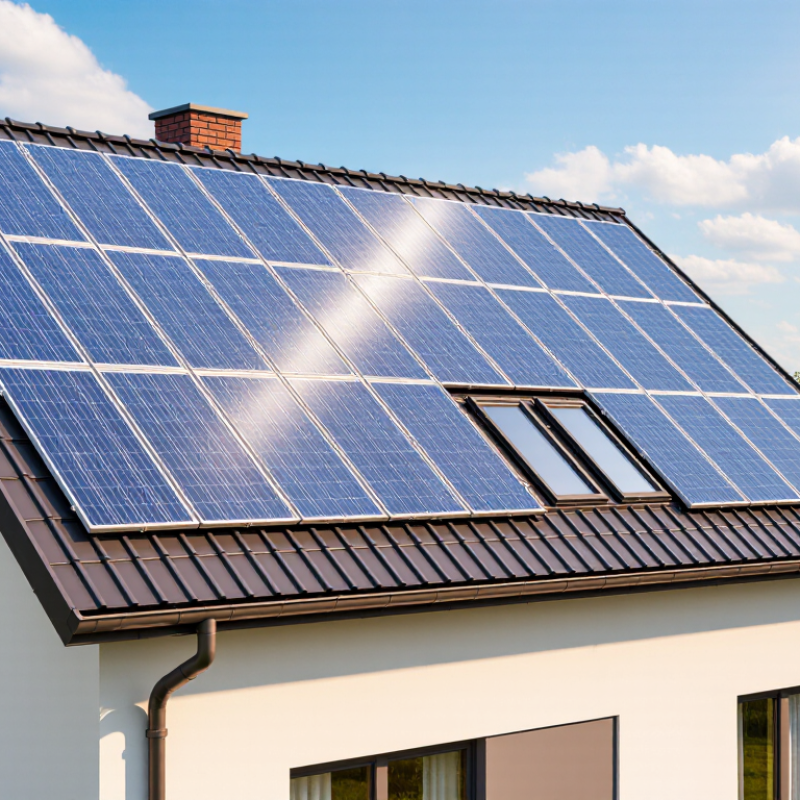
A suitable roof is more than a large, empty surface. Check its age, slope, waterproofing, and structural condition before planning panels. Replacing shingles later can require temporary system removal. That cost is easy to overlook. A professional inspection should also examine rafters, vents, chimneys, and nearby trees. Roof space divided by dormers may reduce usable area significantly.
Sunlight matters throughout the year, not only at noon. The National Renewable Energy Laboratory’s PVWatts documentation uses a default system-loss assumption of about 14%. Shading, dust, wiring, and inverter losses can therefore reduce the energy reaching your home. Use a site assessment or solar path analysis to compare winter and summer shadows. A roof can look bright while losing afternoon production. I would not trust a quick phone-app estimate alone.
Available space should match your electricity needs. NREL’s PVWatts model commonly estimates about 100 square feet per kilowatt of solar capacity. A six-kilowatt system may need roughly 600 square feet, before setbacks and maintenance access. The International Energy Agency Photovoltaic Power Systems Programme reports that distributed solar increasingly serves household demand, but local conditions still control output. Leave clear walking routes. Small roofs may need higher-efficiency modules, fewer panels, or a ground-mounted option. The best design is not always the largest one.
A reliable solar decision starts with your electricity bills, not a sales estimate. Collect twelve months of usage data, then compare your daytime and evening consumption. Ask a qualified installer to measure roof direction, shade, structural condition, and available area. My first estimate was too optimistic because I ignored winter shadows and future electricity demand.
Calculate the full price, including equipment, labor, permits, monitoring, maintenance, and possible roof repairs. Then subtract only incentives confirmed by official government or utility sources. Policies can change during 2026. Do not treat a verbal promise as evidence. Compare the remaining cost with expected annual savings, electricity price increases, system degradation, and financing interest. A simple payback estimate helps, but it is not a guarantee.
Tips: Request three written proposals with identical assumptions. Check installer licenses, insurance, references, and warranty terms. Storage deserves separate analysis. A battery may improve backup protection and evening self-consumption, but it can lengthen payback. Review usable capacity, efficiency losses, cycle limits, replacement costs, and emergency loads. A refrigerator, medical device, or internet connection may need priority. Oversizing the battery is a common mistake. I would model several scenarios, including cloudy weeks and lower-than-expected production. Small errors can become expensive over twenty years. Keep the calculations, contracts, and incentive records together.
Choosing solar power for home in 2026 starts with the installer, not the cheapest quote. The IEA PVPS Trends 2024 report recorded more than 400 gigawatts of new solar capacity worldwide in 2023. Rapid growth increases the need for careful workmanship. Choose a qualified installer with proper electrical licensing, insurance, local permits, and proven residential experience. Ask for recent project references and written warranty terms. Credentials matter.
A reliable installer should explain roof condition, shading, battery needs, expected production, and grid requirements in plain language. The Lawrence Berkeley National Laboratory’s Tracking the Sun 2024 report found that residential solar prices vary widely by system size and location. Compare complete proposals, not only panel prices. After installation, inspect the system at least annually. Check inverter alerts, cable connections, roof penetrations, drainage, and nearby vegetation. Monitoring software can reveal sudden production losses, but it cannot detect every loose connection. Do not ignore small warnings.
NREL’s photovoltaic operations guidance emphasizes documented inspections, performance monitoring, and preventive maintenance. Keep service records with dates, photographs, and production readings. I once underestimated how quickly tree branches could shade a roof section. That mistake changed my maintenance plan. Even qualified professionals can miss details, so review the system after storms and unusual power drops. A careful installer should welcome those questions.