How to Choose Commercial Solar Panels in 2026?

In 2026, choosing commercial solar panels requires more than comparing wattage and price. A suitable system must match your roof, electricity demand, climate, and operating schedule. A warehouse with dusty skylights needs different planning from a refrigerated distribution center. Shade, wind exposure, roof age, and maintenance access can change the final result.

Start with verified performance data. Compare efficiency, temperature coefficient, annual degradation, warranty terms, and expected energy yield. Do not rely only on marketing claims. Review independent test results, product certifications, and the manufacturer’s service history. A panel with a slightly lower output may provide better value if it handles heat well and has dependable support. No panel is perfect.

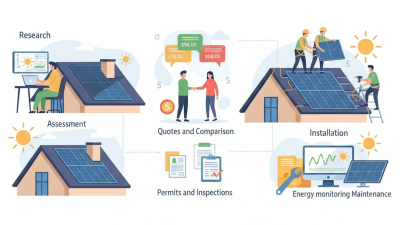
Your installer matters just as much. Ask for commercial project references, detailed production estimates, and clear explanations of inverter compatibility. Confirm whether the roof can support the equipment before signing a contract. A professional assessment should include structural conditions, electrical capacity, fire-safety requirements, and local approval processes. These details are easy to overlook, unfortunately.

This guide explains how to evaluate commercial solar panels for practical, long-term performance. It considers purchase cost, energy savings, financing, monitoring, warranties, and future replacement risks. Real-world experience suggests that the cheapest quote rarely tells the whole story. Still, every project has uncertainty. Weather changes, electricity rates fluctuate, and estimates can be imperfect. Careful questions and documented evidence can reduce those surprises.
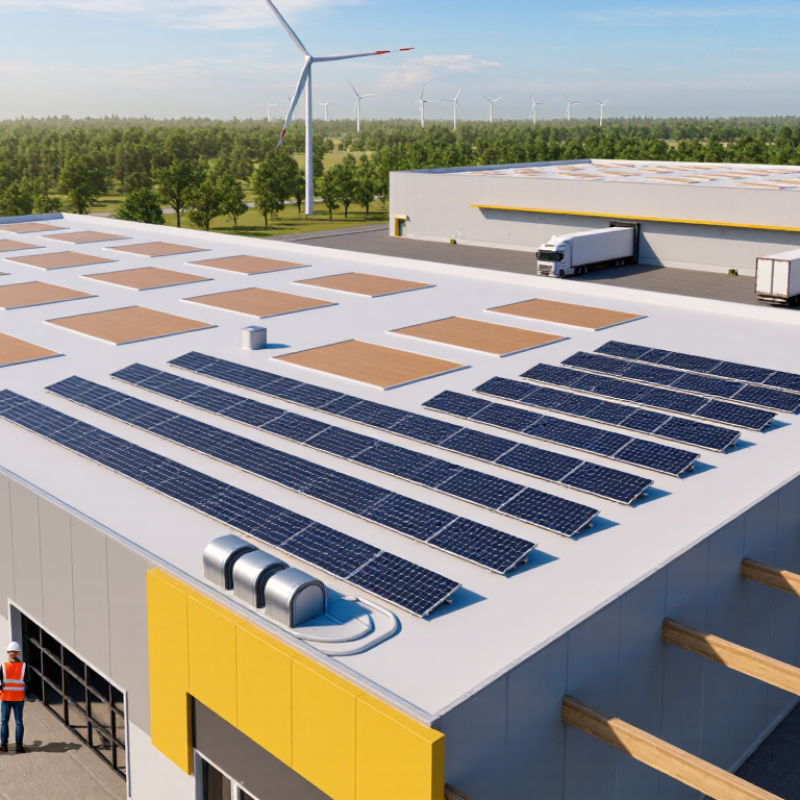
How to Choose Commercial Solar Panels in 2026?

Commercial Solar Panel Basics and Key 2026 Market Changes

How to Choose Commercial Solar Panels in 2026?

Commercial Solar Panel Basics and Key 2026 Market Changes

Commercial solar panels convert sunlight into direct-current electricity. An inverter then supplies usable power to the building. Panel wattage matters, but roof area, shading, temperature, and wiring losses matter more. Real roofs are messier.

In 2026, buyers should compare efficiency, degradation rates, temperature coefficients, and warranty terms. A panel with slightly lower output may perform better on a hot warehouse roof. Bifacial modules can increase production on reflective surfaces, but only with suitable mounting and ground conditions. Measure twice. A spreadsheet can still mislead.

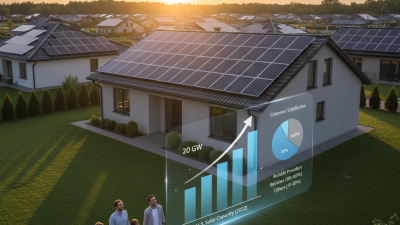
The market is expanding rapidly. IRENA’s Renewable Capacity Statistics 2025 recorded about 452 gigawatts of new solar capacity in 2024, lifting global solar capacity to approximately 1.87 terawatts. The IEA’s Renewables 2024 report expects solar PV to deliver nearly 80% of renewable capacity growth through 2030. This scale is pressuring prices, while supply-chain transparency, recycling plans, and regional manufacturing requirements are receiving greater attention. Commercial buyers should request independent test results, documented production locations, and realistic energy estimates. The cheapest quotation may hide longer delivery times or weaker support. That deserves scrutiny. Grid connection delays, battery integration, and local permitting can also change project economics more than a small efficiency difference.

Assessing Energy Needs, Site Conditions, and Installation Goals

How to Choose Commercial Solar Panels in 2026?

Choosing commercial solar panels in 2026 starts with the load, not the brochure. Gather 12 to 24 months of interval electricity data, demand charges, operating hours, and planned equipment changes. A warehouse running refrigeration at night needs a different design from an office with daytime cooling. According to IEA PVPS Trends 2024, global photovoltaic capacity exceeded 1.6 terawatts in 2023. Market growth still does not guarantee a suitable project. Size the system against usable roof area and the site’s load profile. Measure twice.

Inspect roof age, structural drawings, drainage, fire access, and cable routes before comparing module efficiency. NREL’s PVWatts documentation identifies tilt, azimuth, shading, temperature, and system losses as important production factors. A high-efficiency panel may help on a crowded roof. A lower-cost option may perform better on an open canopy. Check wind, snow, hail, salt exposure, and maintenance access. Shading matters. Use a site survey, not satellite images alone.

Define whether the goal is bill reduction, peak-demand control, resilience, or a fixed payback period. IRENA’s Renewable Capacity Statistics 2024 records 1,419 GW of global solar capacity at the end of 2023, using a different reporting scope from IEA PVPS. That difference is a useful warning. Verify every figure’s definition. Request independent yield modeling, degradation assumptions, warranties, and inverter-replacement allowances. Keep roof loading and future expansion visible. I would not choose panels from efficiency alone. It is tempting, but incomplete.

How to Choose Commercial Solar Panels in 2026?

Assessing energy needs, site conditions, and installation goals

Energy needs

Compare the estimated annual solar output with the facility’s electricity demand. Larger systems can support higher loads, but available roof area and local limits must also be considered.

Site conditions

The chart uses planning yields of 1,100, 1,300, and 1,500 kWh per installed kWdc per year, representing lower, moderate, and strong solar-resource conditions.

Installation goals

Choose the system size according to the target: reduce annual grid purchases, offset daytime demand, or use the maximum practical roof capacity. Final sizing requires shading, roof-load, interconnection, and site-specific production studies.

Benchmark values are calculated from common commercial PV planning assumptions; actual production varies with location, orientation, tilt, shading, equipment, weather, and system losses.

Comparing Panel Technologies, Efficiency Ratings, and Durability

Choosing commercial solar panels in 2026 requires more than chasing the highest efficiency number. Fraunhofer ISE’s Photovoltaics Report 2024 places mainstream commercial module efficiency in the low-to-mid 20% range. Higher efficiency matters on crowded roofs, where every square metre is valuable. TOPCon and heterojunction designs can offer strong output, while thin-film modules may suit lightweight or heat-exposed structures. The best technology depends on roof space, temperature, mounting limits, and maintenance access.

Durability deserves equal attention. NREL field research often uses approximately 0.5% annual degradation for planning, although real results vary with climate and installation quality. Look for tested resistance to humidity, heat cycling, hail, and mechanical loading. IEC certification is a useful filter, not proof of perfect lifetime performance. On a warehouse roof, I would inspect drainage, cable routing, and rear ventilation before comparing small efficiency differences. A panel can test brilliantly and still underperform when dust collects around its frame.

Tips: Request independent test data, not only product sheets. Compare temperature coefficients, warranty terms, and degradation assumptions. Check performance after years five, ten, and twenty. Ask for the exact test standard. Also, challenge your own assumptions. The most efficient panel may increase project cost without improving the site’s return. Dirty roofs, partial shading, and weak maintenance plans can erase laboratory advantages. Consider measured sunlight, usable roof area, and local weather records before signing a purchase agreement.

Evaluating Costs, Warranties, Incentives, and Long-Term Returns

Choosing commercial solar panels in 2026 requires more than comparing the lowest quoted price. NREL’s Q1 2024 benchmark reported an average commercial rooftop system cost of about $1.51 per watt, before project-specific conditions. Roof repairs, electrical upgrades, crane access, and permitting can quickly change that figure. Ask for a line-item proposal. Cheap equipment is not always cheap ownership.

Warranties deserve careful reading. Many modules offer 12–15 years of product coverage and 25–30 years of performance protection, but exclusions vary. NREL field research commonly uses approximately 0.5% annual degradation for planning. That small loss matters over decades. Check the guaranteed output in year 25, not just the opening-year rating. A spreadsheet can still lie. Production estimates should include shading, soiling, temperature, snow, and inverter replacement.

Incentives can reshape long-term returns. Under current U.S. federal rules, qualifying clean-energy projects may receive a 30% investment credit, while wage, apprenticeship, domestic-content, and energy-community conditions can affect eligibility and bonus amounts, according to IRS guidance under the Inflation Reduction Act. Local programs differ. Verify them before signing. Compare simple payback, discounted cash flow, energy-price escalation, maintenance costs, and financing fees. Lazard’s 2024 Levelized Cost of Energy report showed utility-scale solar costs near $29–$92 per megawatt-hour, but commercial rooftops face higher site and financing costs. That comparison is useful, not perfect. A realistic model should test lower electricity prices and delayed repairs, rather than assuming every forecast behaves well.

Selecting Certified Suppliers, Installers, and Maintenance Services

How to Choose Commercial Solar Panels in 2026?

Commercial solar procurement should begin with qualified partners, not panel price. IRENA’s Renewable Capacity Statistics 2024 recorded 1,419 GW of global solar capacity by the end of 2023. That scale increases the value of traceable quality. Ask suppliers for IEC 61215 and IEC 61730 test documentation, serial-number tracking, factory quality records, and written warranty terms. Check whether the supplier can explain product exclusions clearly. Vague promises are expensive later.

An installer should provide recent commercial references, site-specific production estimates, and evidence of recognized electrical and solar credentials. Request details about roof loading, cable routing, fire access, drainage, and grid interconnection. A competent crew will measure shading at different hours, not rely on one midday photograph. The International Energy Agency Photovoltaic Power Systems Programme reported over 400 GW of new PV capacity in 2023. Fast growth can encourage rushed workmanship. I would inspect commissioning records, insulation tests, torque logs, and monitoring screenshots before releasing final payment.

Maintenance planning needs equal attention. NREL research commonly identifies around 0.5% annual photovoltaic degradation, but poor cleaning, hot spots, loose connectors, and water ingress can create larger losses. Require infrared inspections, vegetation control, storm checks, and response-time commitments. Keep spare connectors and updated drawings onsite. A contract is not proof of service. I have seen impressive dashboards hide unresolved alarms, so verify performance against the original yield model each month. Even a careful selection can miss local weather patterns. That deserves review.