How to Choose the Best Commercial Solar Solutions for Your Business
Choosing the right commercial solar solutions is crucial for businesses today. With rising energy costs, many companies seek sustainable options. Expert Mike Anderson, a leading figure in commercial solar, states, “Implementing solar can significantly enhance a business’s bottom line.” This highlights the undeniable financial impact of solar energy adoption.
When evaluating commercial solar options, businesses should consider multiple factors. The system's size, efficiency, and installation costs are essential. Also, businesses must assess their energy consumption patterns. It’s not a one-size-fits-all approach. Tailoring solutions to specific needs ensures more effective results. Many companies face challenges in understanding these complexities. This often leads to missed opportunities.
Moreover, the commercial solar industry is evolving rapidly. New technologies emerge frequently. Businesses must stay informed to make sound investments. Engaging with experts can provide tailored insights. However, every decision requires careful consideration. Mistakes can be costly, and not all products guarantee performance. Finding reliable solutions is key to long-term success.
Understanding Your Business's Energy Needs
Understanding your business's energy needs is crucial when considering commercial solar solutions. Begin by assessing your current energy consumption. Take a detailed look at your utility bills. Identify peak usage times and patterns. Understand how much energy your operations require on a daily and monthly basis. This data forms the foundation for selecting the right solar system.
Next, consider the nature of your business. Do you have consistent energy usage throughout the day or fluctuations? Businesses like retail shops may have varying demands based on customer traffic. Manufacturing companies may need a steady supply of energy. This aspect influences the type and size of the solar system needed. Consult with energy experts to help interpret your data. They can provide insights into potential savings and system performance.
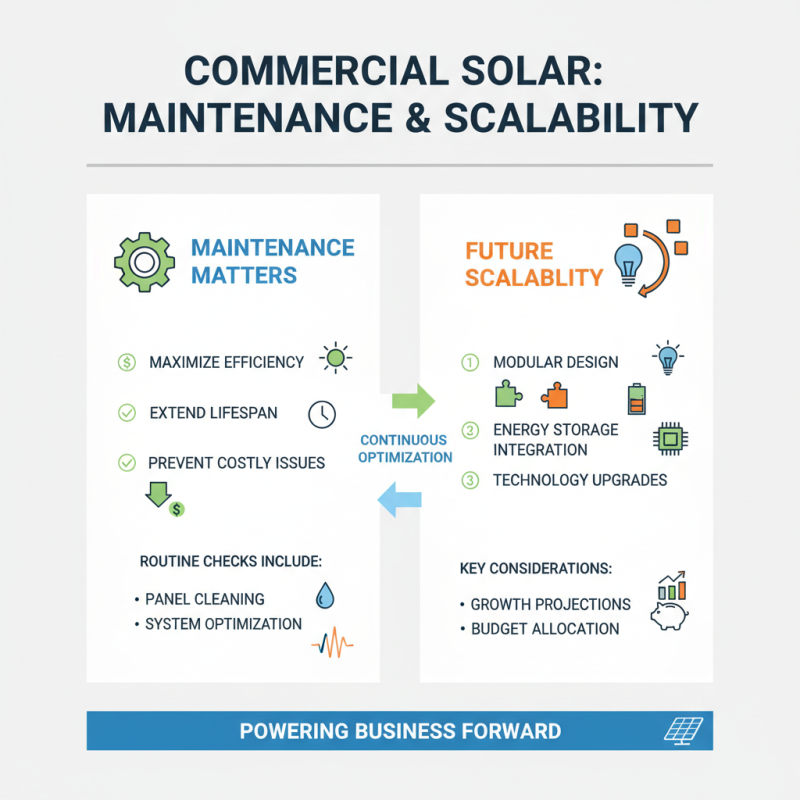
It is important to reflect on your future needs as well. As your business grows, your energy requirements may change. Will you expand operations or add new equipment? Such changes can impact your solar energy needs. Ensure that any solution you choose is scalable. A flexible and adaptable system will serve your business better in the long term.
How to Choose the Best Commercial Solar Solutions for Your Business - Understanding Your Business's Energy Needs
| Energy Needs Assessment |
Monthly Energy Consumption (kWh) |
Peak Demand (kW) |
Suggested Solar System Size (kW) |
Potential Savings per Month ($) |
| Retail Store |
2000 |
15 |
10 |
$300 |
| Manufacturing Facility |
5000 |
40 |
25 |
$750 |
| Office Building |
3500 |
25 |
15 |
$450 |
| Restaurant |
4000 |
30 |
20 |
$600 |
| Warehouse |
7000 |
50 |
35 |
$1050 |
Evaluating Different Types of Commercial Solar Solutions
When evaluating different types of commercial solar solutions, it’s essential to understand the unique energy needs of your business. Not all solutions fit every requirement. For instance, according to the Solar Energy Industries Association (SEIA), solar installations in commercial sectors rose by 47% in the last year. This suggests that businesses are increasingly opting for solar to reduce energy costs and enhance sustainability.
One common choice is rooftop solar panels. They utilize existing structures, thereby minimizing land use. However, installation can be costly upfront. In contrast, community solar projects allow multiple businesses to share a solar farm. This option can be particularly beneficial for companies lacking sufficient roof space. While community solar requires partnerships, the cost benefits can be significant.
Another alternative is solar power purchase agreements (PPAs). These agreements enable businesses to utilize solar energy with little to no upfront cost. However, businesses must be careful about the terms. If not carefully reviewed, these contracts might lead to long-term obligations that could restrict flexibility. Each option has its pros and cons. Businesses should analyze their energy use and financial thresholds to select a suitable commercial solar solution.
Analyzing Costs and Financial Incentives for Solar Adoption
When considering solar adoption, analyzing costs and financial incentives is crucial. A recent report by the National Renewable Energy Laboratory highlights that businesses can save up to 75% on energy costs after transitioning to solar energy. These savings often justify the initial investment.
Financial incentives play a key role in this decision. The federal investment tax credit (ITC) offers a 26% rebate on solar system installation costs until the end of 2023. Additionally, many states provide their own incentives, which can further boost savings. For instance, California's solar incentive program can reduce upfront costs by an additional 20%. However, keeping track of these incentives can be challenging for businesses.
It is important to reflect on the long-term impact of these investments. Falling solar panel prices mean that the initial expense is decreasing. Yet, some businesses may still struggle with financing. Conducting a comprehensive financial analysis helps clarify these challenges. Understanding cash flow implications is essential for making informed decisions about solar investment.
Cost Analysis of Commercial Solar Solutions
This chart compares the average installation costs and expected financial incentives for commercial solar solutions across different regions. The data reflects the ongoing trend of solar adoption in various parts of the country.
Selecting a Reputable Solar Provider
Selecting a reputable solar provider is crucial for businesses aiming to invest in commercial solar solutions. Trustworthy providers should showcase experience and expertise. A company with a solid track record can often be more reliable. Researching customer reviews and asking for case studies can reveal their reliability.
Industry reports indicate that 70% of businesses that switch to solar see significant cost savings within the first five years. It’s important to verify that potential providers have necessary certifications and are well-versed in local regulations. These credentials often reflect a commitment to quality and professionalism.
Moreover, transparency is key. Providers should offer clear cost breakdowns and discuss project timelines candidly. Businesses must ask for detailed proposals and explore the fine print. A less-than-thorough explanation might indicate potential issues down the road. Choosing the right provider can lead to long-term benefits. However, the decision must be made with careful consideration of all factors involved.